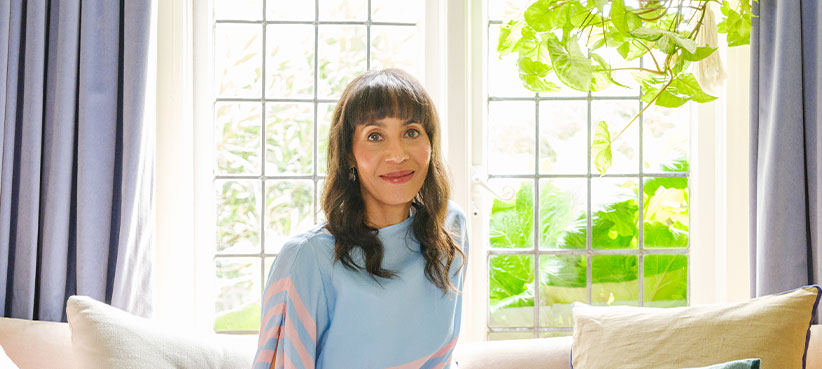
Michelle Ogundehin is a renowned leader and innovator in the world of interior design. Alongside multiple television credits, including the hugely successful Interior Design Masters with Alan Carr, her list of achievements is vast. From Senior Editor at Blueprint Magazine, regular contributor for The Observer Magazine, all the way to Editor-at-Large for Elle Decoration, Michelle has accumulated several accolades throughout her career.
Michelle elevates the interior design experience from what we all know it to be. With knowledge and expertise that are second-to-none, she teaches a new way of living, a new way of understanding and a new way of simply being. Authenticity flows in every project Michelle puts her name to and it’s refreshing to see a leader in interior design be as passionate about wellbeing as they are with style and aesthetics.
Here, Michelle gives us an insight in to the wonderful world of home therapy, as well as the next series of Interior Design Masters and some exciting collaborations!
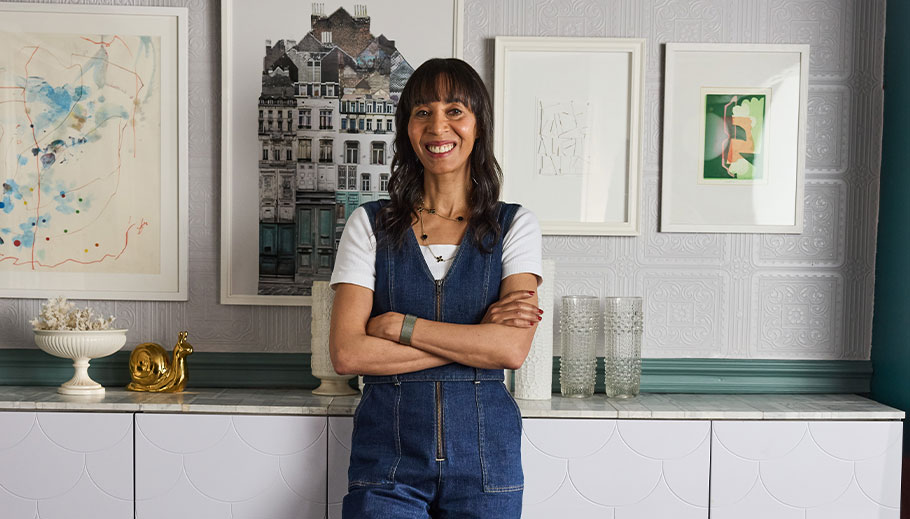
Image Credit: Michelle Ogundehin
Michelle on Interior Design Masters
What can you tell us about this series?
Every season I think the show feels more assured and the designers more brilliant. The briefs are broader and more commercially grounded, pushing contestants to think beyond aesthetics. It’s no longer just about creating a striking room; it’s about understanding context, the user and longevity. Viewers will see stronger strategic thinking alongside incredible creativity.
Is there a stand-out design we should look out for?
I can’t give anything away! But there’s a project this series that stands out for its restraint. It proves that emotional intelligence and proportion often create more impact than spectacle. The most powerful interiors aren’t always the loudest.
What stands out about this year’s contestants?
There’s a noticeable shift toward more holistic thinking. Contestants are more aware of sustainability, sensory impact and how people actually behave in spaces. The understanding that design influences wellbeing, not just appearance, is much stronger.
Across seven series, what trends or shifts have stood out most?
Early on there was more emphasis on bold pattern and statement moments. Over time, there’s been a move towards perhaps slightly calmer palettes. Sustainability has become an expectation rather than a niche concern. There’s also greater awareness that good design must function commercially as well as photograph beautifully.
“The most powerful interiors aren’t always the loudest.”
Michelle on Moving Home
Having moved house, what were you most excited to tackle?
I was most interested in how the layout could support my daily rhythm – sleep, focus and restoration. Before thinking about decoration, I look at flow, light and how each space is used. The bones of a property matter more to me than the styling. And my new home is 18th Century, so there’s lots of restorative work to do before I can get to any of the fun stuff.
How do you balance professional philosophy with personal preference?
For me they are completely aligned. My professional approach centres on wellbeing, so at home I prioritise natural materials, breathable finishes and calm sensory cues. The difference is simply that at home I can be more instinctive. I’m satisfying only myself and my family.
What’s next on your design to-do list?
Refinement rather than addition. I’m looking at lighting layers, colour temperature and air quality. Subtle adjustments often have the greatest impact on how a space feels.
Top tips for making a new property feel like home?
Resist the urge to decorate immediately. Live in the space first and observe how the light moves and how you move within it. Because, when you move, everything is unfamiliar: light levels, acoustics, the flooring underfoot, even how sound travels. Your nervous system is quietly assessing all of this. I find it really helps to prioritise one restorative zone – often the bedroom, or a living space – before tackling statement areas. A favourite chair, a particular lamp, a rug, artwork, even bedding – provides continuity. It tells the body: this is still your life, just in a new setting.
Michelle on Large Properties
How do you make a large property feel homely?
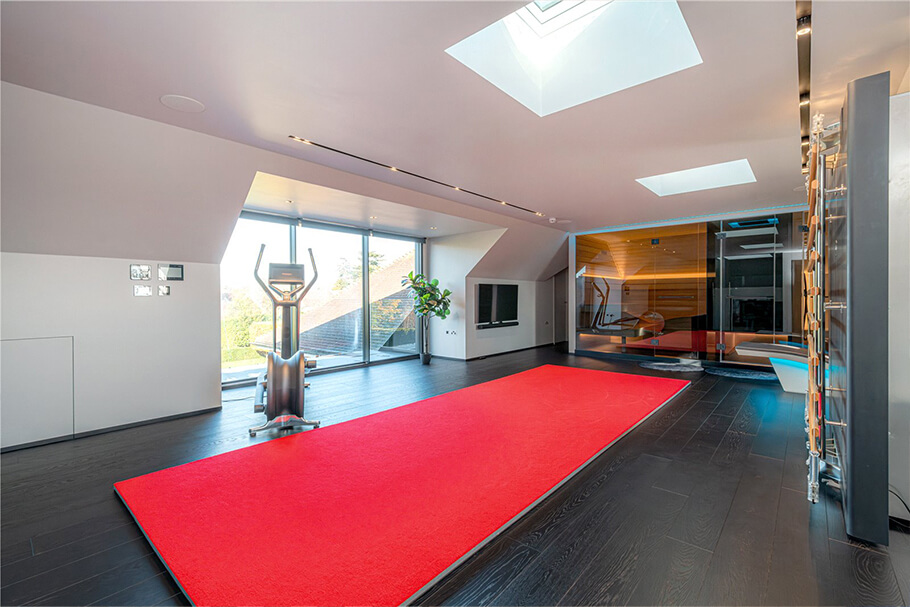
Large spaces can create emotional distance if they aren’t handled carefully. The solution isn’t to fill them, but to humanise them. Use zoning to create intimacy within volume, layer lighting and introduce texture to soften acoustics. A large house should feel composed of purposeful moments rather than empty expanses.
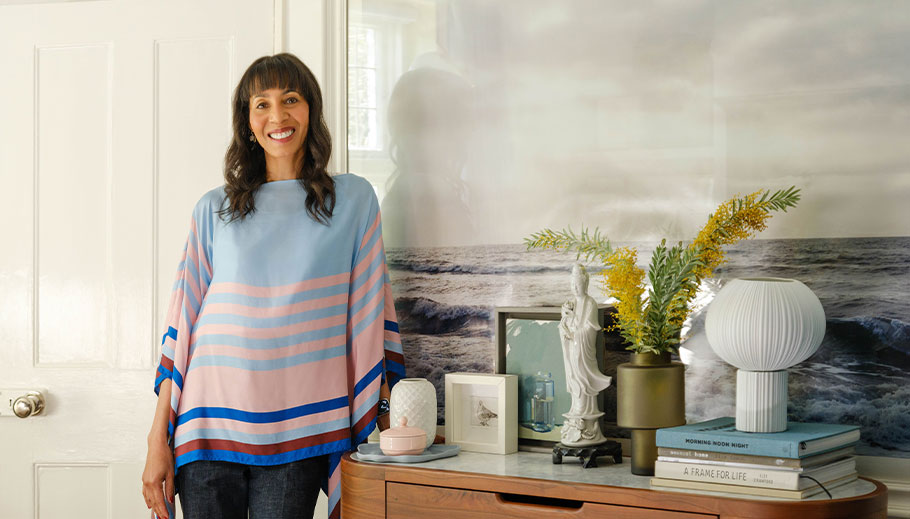
Image Credit: Michelle Ogundehin
Michelle’s Top 3 Ways to Create a Home that Heals
1) Prioritise air quality, light and materials – the invisible foundations of health
2) Reduce visual noise; the nervous system registers clutter as demand
3)Ensure your space reflects your current life stage, not an outdated version of yourself
Michelle on Home Therapy
What does a home that heals mean to you?
It’s a home that supports you. A place where the body can soften, the mind can focus and the spirit can feel grounded. Healing is cumulative. It happens when your environment consistently works in your favour. Our homes need to do more of the heavy lifting for us.
Advice for someone downsizing after decades in one home?
Start with identity, not possessions. Ask who you are now and what you need next. Keep what supports your present and future life. Release what belongs to a chapter that has closed. Approach it gradually, room by room, rather than attempting to do everything at once.
Michelle on Recent Partnerships
Tell us about your collaboration with Graphenstone.
The collaboration reflects a shared commitment to healthier interiors. Mineral-based, breathable paints support better indoor air quality and reduce toxin exposure. For me, that aligns directly with the idea that beauty and performance should go hand in hand.
What makes your Ruggable collection unique?
The focus was on beauty and practicality without compromise. A washable, modular system supports real life while maintaining design integrity. Good design should work hard and reduce stress, not add to it. My designs also reflect my love of the natural world with a nod to Japan, and a dose of the pretty. All essential in my eyes for home!
Any insight into current or upcoming collaborations?
I’m increasingly focused on partnerships that combine aesthetics with measurable wellbeing benefits – materials that improve air quality, reduce cognitive load and support longevity. The future of interiors lies in performance as much as appearance. Watch this space!
Want to discover more? Request your complimentary copy of Prime Magazine, our luxury lifestyle magazine, showcasing a selection of the finest homes that we have for sale throughout Surrey and south west London alongside luxury lifestyle articles from hand-picked partners and businesses across the county.