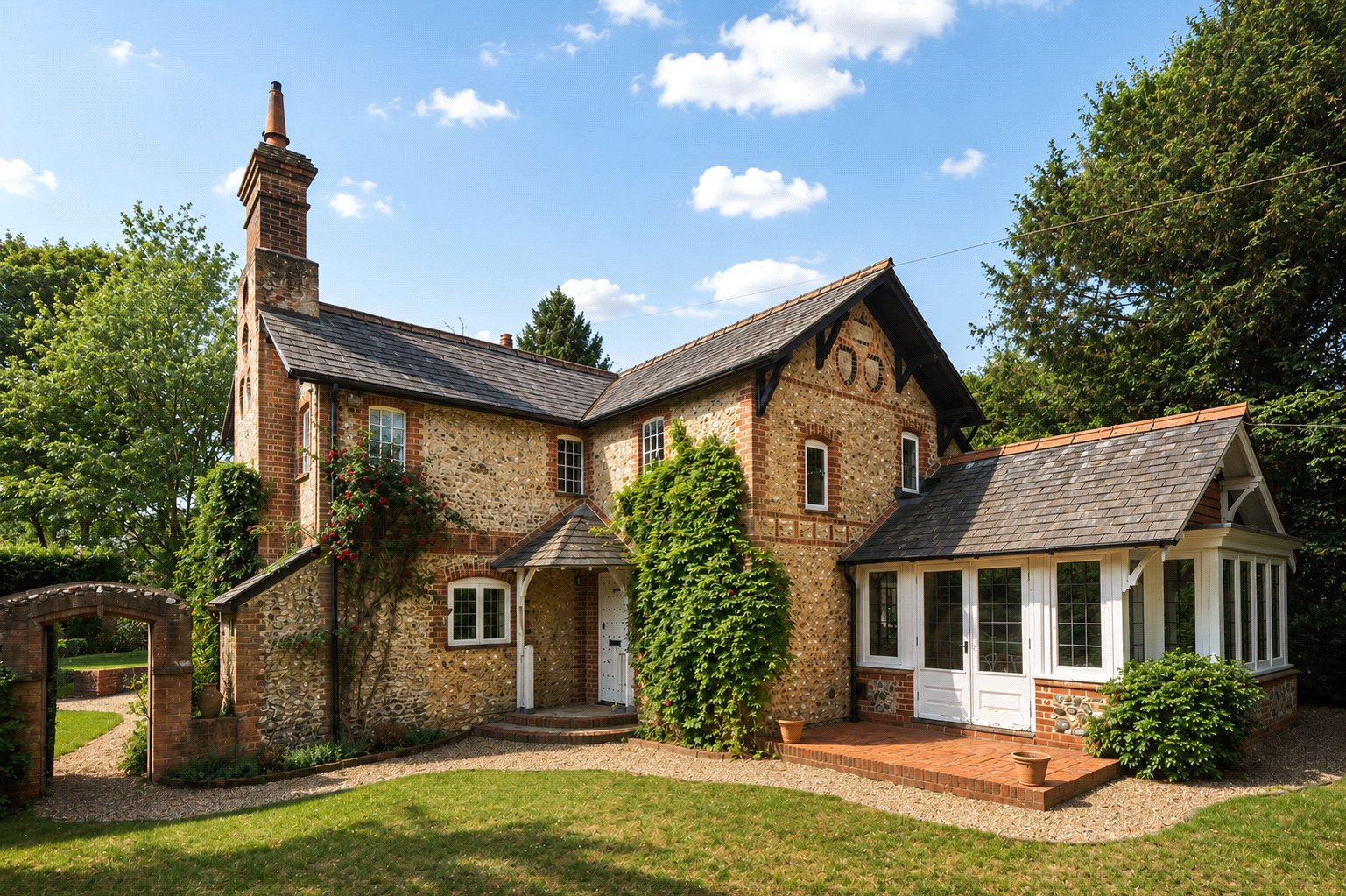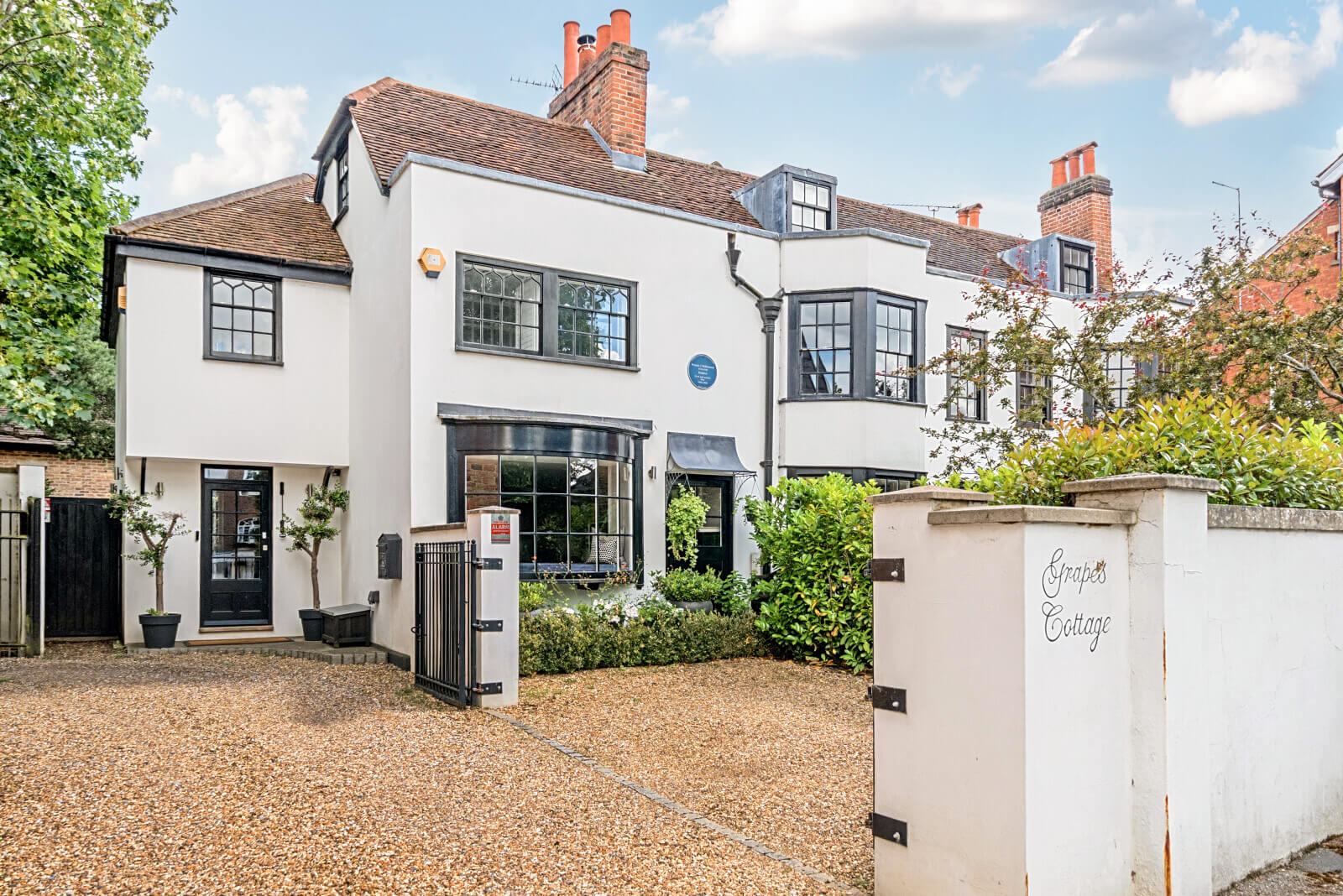
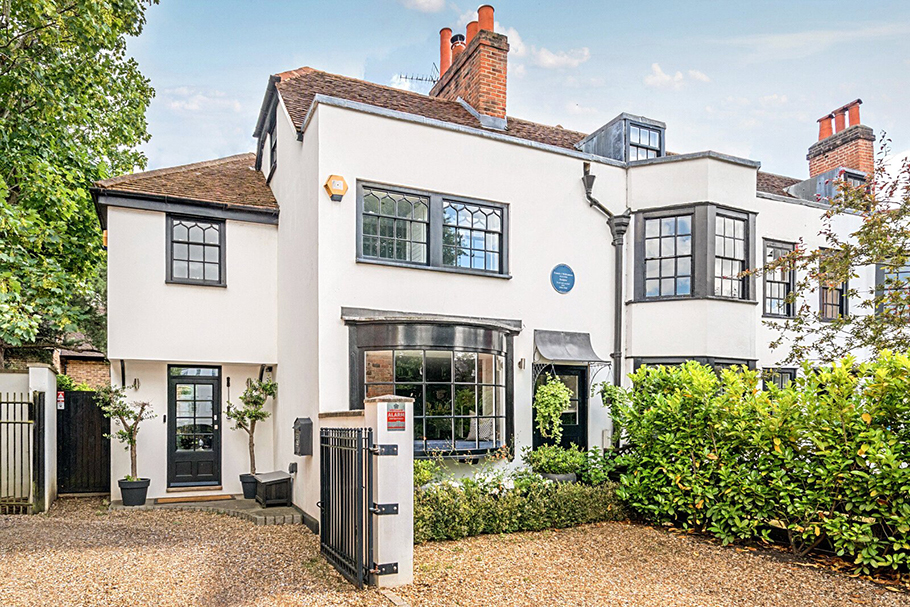
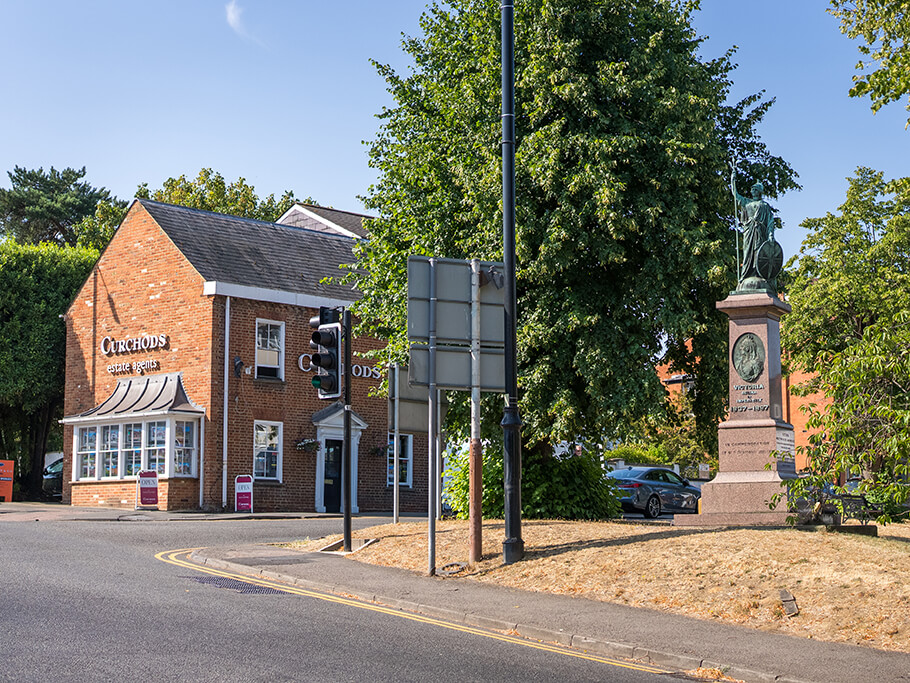
Mounted above the entrance of Grapes Cottage, a blue plaque offers a clue to the remarkable history behind this familiar Esher High Street property. Standing directly beside the Curchods Esher office, the house was once home to renowned Victorian sculptor Francis John Williamson. From 1860 until his death in 1920, Williamson lived and worked here, establishing a connection between the property, the Royal Family and several of Esher’s most recognisable landmarks.
Now available for sale with Curchods Esher, it’s a rare opportunity to look beyond the front door of a building that has played a distinctive part in the town’s artistic history.
From Royal Commissions to the Royal Academy, the works created within the walls of Grapes Cottage.
Born in Hampstead in 1833, Francis John Williamson trained under celebrated sculptors John Bell and John Henry Foley, later working as Foley’s studio assistant. He went on to build a successful career of his own, exhibiting regularly at the Royal Academy between 1853 and 1897. Williamson became particularly well known for his royal commissions and has been described as one of Queen Victoria’s favoured sculptors.
The Queen and several members of the Royal Family sat for Williamson during his career. His work also included portraits and memorials depicting notable figures from Victorian public and cultural life.
In 1860, Williamson moved to Esher with his wife, Elizabeth, settling at the house then known as Fairholme. Later known as ‘The Bunch of Grapes’, the property became both his family home and working studio for the next 60 years.
Much of Williamson’s work depended upon close observation, with his subjects sitting for portraits and sculptural studies. Although there is no definitive record of every visitor received at the house, it is intriguing to consider who may have crossed the threshold at Grapes Cottage during his long career. Members of the Royal Family, prominent writers and distinguished Victorian figures all formed part of Williamson’s professional world.
Whether his more famous sitters came to Esher or were received elsewhere cannot always be confirmed, but the possibility adds another layer to the story of the house. Its rooms may once have witnessed conversations, preliminary sketches and the early stages of works that later appeared in public spaces, churches and galleries.
Art on the doorstep
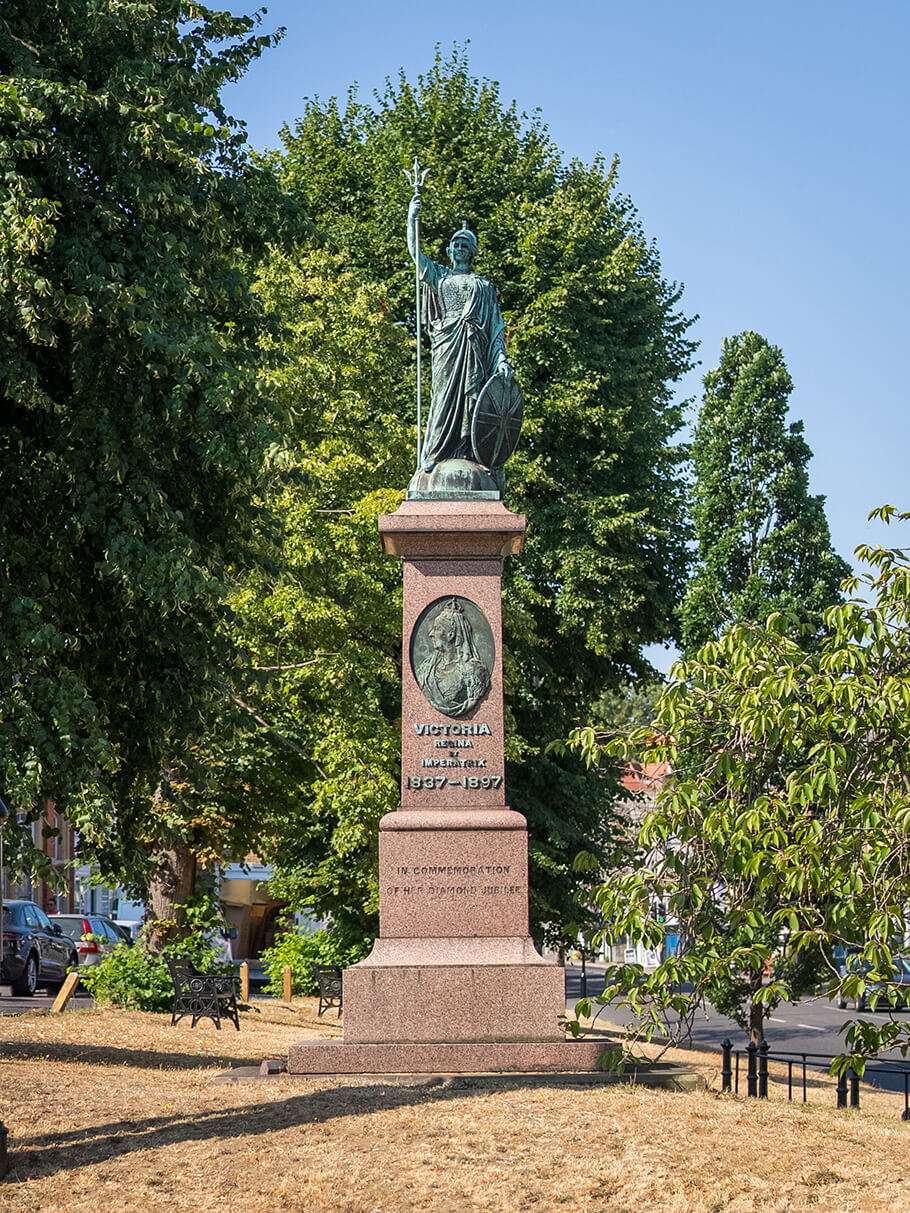
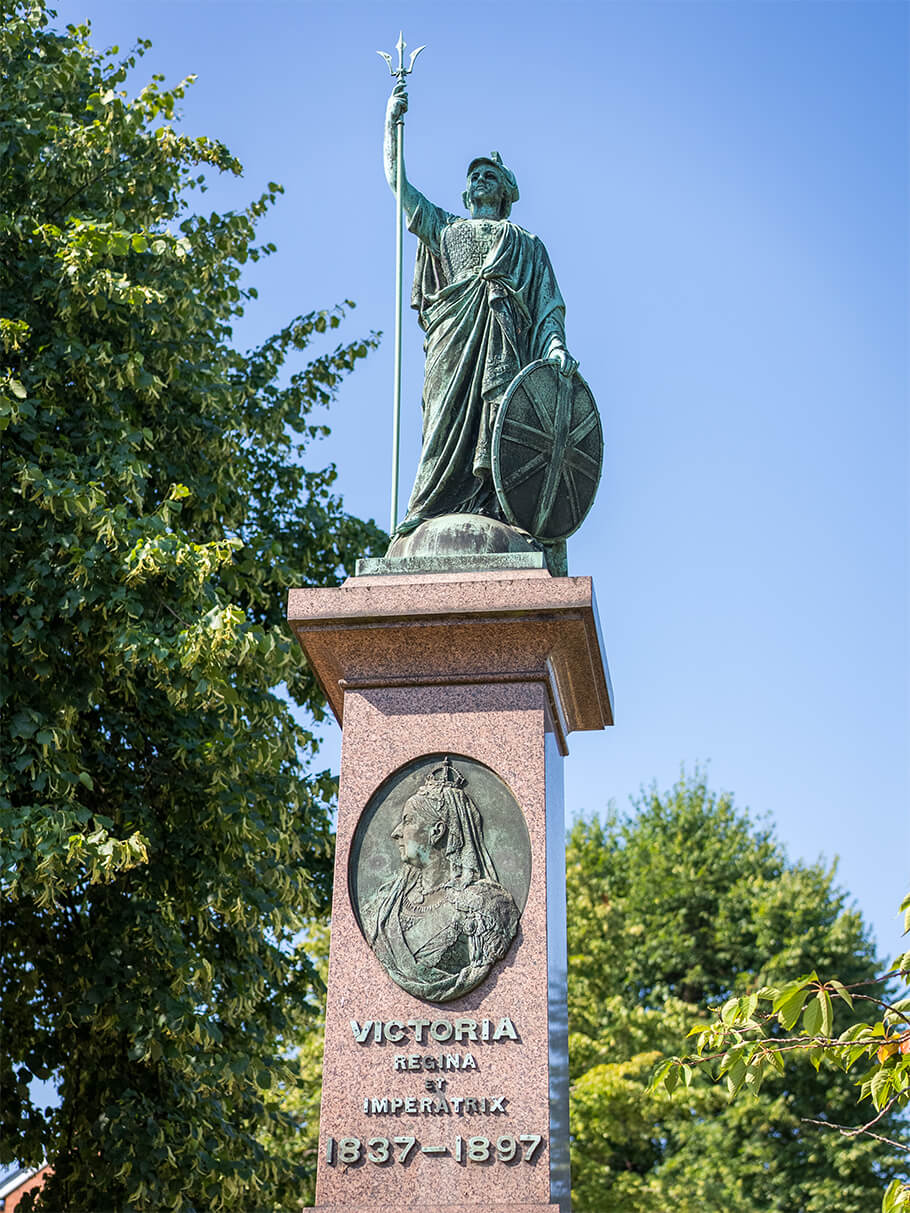
The clearest reminder of Williamson’s legacy stands almost directly outside his former home. On the green dividing Esher High Street is the Diamond Jubilee Memorial, created to mark Queen Victoria’s 60 years on the throne. The monument remains one of the town’s most familiar landmarks, yet many people passing it each day may be unaware that its sculptor lived and worked only a few steps away.
Its position creates an unusually strong connection between artist, home and artwork. From the front of Grapes Cottage, Williamson’s contribution to Esher remains visible more than a century after his death.
His local legacy can also be found elsewhere in the local area too. Williamson’s memorial to Princess Charlotte and Prince Leopold, originally commissioned for nearby Claremont, can be found at St George’s Church in Esher. Nearby Christ Church is home to two of Williamson’s works, the memorial bust of Prince Leopold, Duke of Albany and the tomb of William and Eugenie Brett, Viscount and Viscountess of Esher. There is also a memorial to Williamson himself inside Christ Church.
A historic house adapted for modern life
While its history is central to its identity, Grapes Cottage has continued to evolve. The property has been modernised, creating a contemporary home behind its recognisable High Street exterior. Rather than presenting as a preserved artist’s residence, it reflects the way historic buildings often develop over time, adapting to new generations while retaining their connection to the past.
Its position is also a notable part of its appeal. Set directly on Esher High Street, the house places shops, cafés, restaurants and local amenities within immediate reach, whilst off-street parking in such a central location, offers a level of convenience rarely found so close to the heart of the town.
Part of Esher’s everyday landscape
The blue plaque above the entrance was installed by the Esher Residents Association in 2010 in recognition of Williamson’s association with the property. It was the first plaque created as part of the association’s scheme celebrating notable former residents.
Today, the house, the memorial outside and the neighbouring High Street form part of Esher’s everyday landscape. Their familiarity can make it easy to overlook the remarkable story connecting them.
For more than six decades, this was the home and workplace of a sculptor whose subjects included royalty and some of the best-known figures of his age. The house has since changed, as all well-lived-in homes do, but its place within Esher’s history remains.
Grapes Cottage is a reminder that the story of a home is not always contained within its architecture. Sometimes, it can be found in the people who lived there, the visitors who may have passed through or, in this rare case, a former owner’s artistic influence in the local area and memorial sculpture that stands just outside.